In the realm where light meets shadow, where a flicker on screen can stir a revolution in the heart, lies the profound power of Filmmaking & Storytelling Techniques. It's more than just pointing a camera and hitting record; it's an intricate dance between vision and craft, a deliberate act of weaving emotions, ideas, and experiences into a tapestry that resonates deeply with an audience. This isn't just about making movies; it's about crafting narratives that move, inspire, and endure.
Whether you're an aspiring director, a seasoned writer, or simply a passionate film enthusiast, understanding these techniques unlocks the magic behind every captivating frame. This guide is your backstage pass to dissecting that magic, showing you how to build narratives that don't just tell a story, but live it.
At a Glance: Key Takeaways for Masterful Storytelling
- Visual First: Film is a visual medium. Show, don't tell, using every element in the frame.
- Character is King: Audiences connect with authentic, evolving characters and their journeys.
- Structure Guides Emotion: A well-paced narrative with a clear beginning, middle, and end keeps viewers engaged.
- Sound is Half the Story: Music and sound design are crucial for emotional tone and immersion.
- World-Building Matters: A believable setting enhances immersion and reinforces themes.
- Every Choice is Intentional: From camera movement to dialogue, each element serves the story.
The Bedrock of Narrative: Plot, Character, and Dialogue
At its heart, every compelling film story is built on three pillars: a structured plot, characters that breathe, and dialogue that sings. Master these, and you have the foundation for something truly memorable.
Constructing the Narrative Backbone: Plot
Think of plot as the blueprint of your story, guiding viewers through a carefully orchestrated sequence of events. A robust plot isn't just a series of things happening; it's a cause-and-effect chain, designed to evoke specific emotional responses and keep the audience invested.
Traditionally, this backbone follows a classic five-stage structure:
- Exposition: Introducing the world, characters, and initial circumstances.
- Rising Action: Building tension and conflict as the protagonist faces obstacles.
- Climax: The peak of the conflict, where everything changes.
- Falling Action: The immediate aftermath of the climax, tying up loose ends.
- Resolution: The final outcome, showing the new normal and the characters' transformations.
Each stage isn't just a checkbox; it's an opportunity to propel the story forward, escalate stakes, or deepen our understanding.
Crafting Souls: The Art of Character Development
Characters are the emotional core of any narrative. Without them, even the most spectacular visual effects fall flat. To truly engage an audience, your characters need to be more than just plot devices; they need intricate backgrounds, compelling desires, and relatable fears.
Their journey shouldn't be static. Instead, they should evolve, responding to the events and conflicts you've placed in their path. This evolution—their growth, their failures, their triumphs—is what truly hooks an audience, making them root for, despair with, and ultimately remember your story. Think about what they want, what they need, and what stands in their way. These internal and external conflicts fuel their development and drive the emotional stakes.
The Voice of Your Story: Meaningful Dialogue
Dialogue isn't merely conversation; it's a powerful tool that serves multiple functions: advancing the plot, revealing character depth, and presenting conflict. Good dialogue sounds natural, but it's far from accidental.
It must be authentic to each character, reflecting their personality, background, and relationships. It should also subtly (or overtly) reveal the story's world, its rules, and its mood. The balance between what is said and what is left unsaid can be incredibly potent, adding layers of subtext and inviting the audience to lean in closer.
The Visual Symphony: Showing, Not Just Telling
In film, the camera is your pen, and every frame is a word. Visual storytelling is paramount, embodying the adage "show, don't tell." This means conveying meaning through what the audience sees—actors' expressions, setting details, props, and the very composition of the shot.
Cinematography: Painting with Light and Lens
Cinematography is the art of capturing visual elements, acting as the film's "visual symphony." It encompasses everything from camera angles and movement to shot composition and depth of field. A high-angle shot might convey vulnerability, while a low angle suggests power. A wide shot establishes context, while a tight close-up demands attention. These choices are deliberate, designed to guide the viewer's eye and emotional response.
Shaping Time and Pacing: The Editor's Touch
Editing is where the raw footage is sculpted into a cohesive narrative, establishing rhythm and pacing.
- Quick cuts can heighten tension, creating a sense of urgency or chaos.
- Longer takes allow moments to breathe, adding gravity or fostering intimacy.
The editor's decisions fundamentally shape how the audience experiences time, builds suspense, and connects with the story's emotional beats.
The Palette of Emotion: Color and Lighting
Color and lighting are powerful, often subconscious, tools for atmosphere and psychological impact.
- Subdued lighting can evoke suspense, mystery, or sadness.
- Bright, vibrant colors often signify joy, optimism, or energy.
Beyond mood, they can suggest time of day, season, or even a character's internal state. Think of the warm, golden hues of a nostalgic flashback versus the stark blues and grays of a dystopian future. These choices are never arbitrary; they are deeply integrated into the narrative's emotional landscape.
Visual Shortcuts: The Power of Photographs and Close-ups
Sometimes, a single image can speak volumes.
- Photographs within a scene can act as a visual shortcut, instantly conveying character background, emotional depth, or key plot points with minimal dialogue. A faded family photo can hint at a past trauma; a candid snapshot reveals a hidden relationship.
- Close-ups are crucial for magnifying significance. By drawing attention to specific details—a subtle facial expression, a trembling hand, a crucial object—they amplify the emotional impact of performances and ensure the audience doesn't miss vital cues.
The Immersive World of Audiovisual Elements
While visuals lead the charge, sound and music are indispensable partners, working in harmony to create a truly immersive experience.
The Underscore of Emotion: Music and Sound Design
Music and sound design are not mere background elements; they are active participants in shaping the emotional tone, underscoring dramatic moments, and adding layers of realism. As No Film School wisely notes, sound helps maintain the captivating state initiated by visuals.
- Music can evoke dread, hope, excitement, or sorrow, often guiding the audience's feelings more directly than visuals alone.
- Sound effects—the creak of a floorboard, the distant wail of a siren, the gentle patter of rain—add realism, enhance atmosphere, and can even foreshadow events.
Together, they create an auditory landscape that pulls the viewer deeper into the story.
The Guiding Voice: Narration
While often used sparingly, narration can be a vital tool, particularly in documentaries or stories requiring intricate exposition. It guides the audience, adds layers of meaning, and provides insights into characters' thoughts or overarching themes that might be difficult to convey purely visually. A well-placed voiceover can establish an intimate connection with the audience, offering a window into the narrator's perspective.
Architecting Time: Narrative Structure and Pacing
The way you unfold your story—the order of events, the speed at which they are revealed—is as crucial as the events themselves.
Mastering the Flow: Pacing
Pacing is the art of balancing emotional intensity with moments of calm, ensuring the story remains dynamic and engaging. A relentless barrage of high-octane scenes can be exhausting, just as an overly slow pace can lead to disinterest. Expert pacing knows when to accelerate, when to slow down, and when to pause for reflection, guiding the audience's emotional journey.
The Art of the Hint: Foreshadowing
Foreshadowing, often employing the "setup and payoff" principle (or Chekhov's Gun), involves subtly hinting at future events or outcomes. This creates anticipation and adds narrative layers, making the audience feel smart when they piece things together. A concept or object introduced early in the story might return later as a pivotal plot point, creating a satisfying sense of narrative closure. Think of the infamous "burn book" in Mean Girls, an early prop that becomes central to the climax.
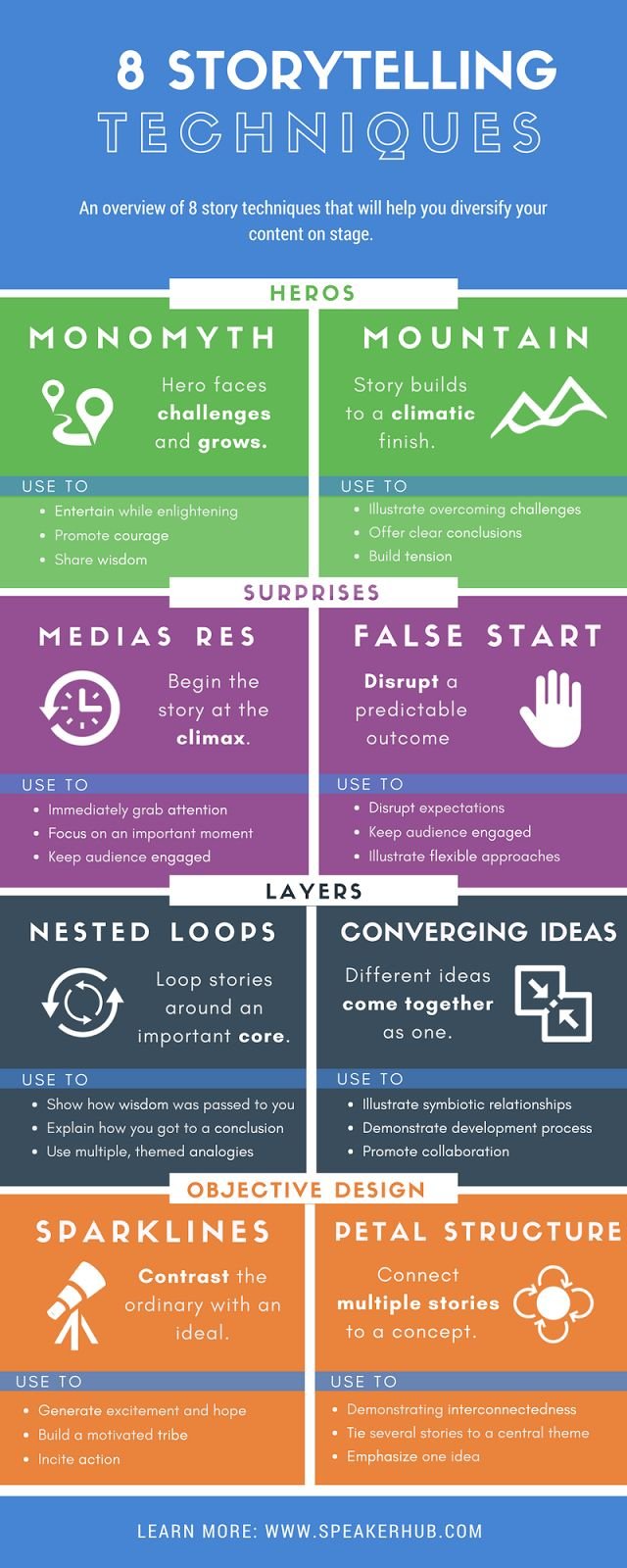
Dropping into the Action: In Medias Res
"In Medias Res" (Latin for "in the middle of things") is a powerful technique that immediately engages the audience by starting the story directly in the midst of an intriguing plot point, rather than the chronological beginning. This builds suspense and compels viewers to uncover how the characters arrived at this predicament. Iconic series like Breaking Bad and films like The Green Mile masterfully use this technique to hook their audiences from the first frame.
The Universal Journey: The Hero's Journey
Joseph Campbell's "Hero's Journey" describes a common narrative progression found across cultures and epochs. A protagonist embarks on an adventure, faces a series of obstacles and temptations, learns profound lessons, and ultimately returns transformed, bringing newfound wisdom or resources back to their world. From The Wizard of Oz to countless contemporary films, this framework provides a powerful and relatable structure for character growth and epic narratives.
Guiding the Heart: Emotional Beats
Emotional beats are specific moments meticulously designed to guide the audience's feelings. These shifts in emotion—building tension, releasing it with catharsis, instilling fear, then offering relief—are the pulse of your story. Understanding and strategically placing these beats ensures your narrative takes the audience on a rollercoaster of feelings.
Seeing Through Their Eyes: Camera Movements
Camera movements are more than just technical necessities; they actively influence audience perspective and emotional response.
- A slow zoom-in can create intimacy or emphasize a character's internal struggle.
- A quick pan might convey adrenaline, disorientation, or the sudden realization of danger.
- A tracking shot can immerse the viewer in the character's journey, mimicking natural focus and inviting empathy.
Building Worlds That Breathe: Setting, Context, and Research
A compelling story often resides within a believable world. Crafting this world requires meticulous attention to detail and thorough research.
The Foundation of Immersion: Setting and World-Building
World-building is crucial for creating immersive experiences. It’s about defining your story’s universe through specific details: architecture, geography, period-specific elements, and even the subtle quirks of its inhabitants. Constructing a believable world means considering its history, cultural norms, geographic specificities, and how these elements integrate with your story's themes. A consistent system—be it magic or technology—ensures the world feels lived-in and authentic. For instance, creating the futuristic, yet gritty world of Blade Runner required an incredible amount of detail in set design, costume, and visual effects to make it feel real.
The Authentic Lens: Research
Meticulous research informs creative decisions, ensuring authenticity and enriching the narrative. This isn't just about facts; it’s about understanding the nuances. Utilize primary sources, pay attention to cultural specificities, dive into the details of your chosen setting, and even consider the language and dialect of your characters. Authenticity builds trust with your audience and adds depth that generic stories often lack.
Genre-Specific Storytelling: Tailoring Your Approach
Different genres come with their own unique demands and expectations. Understanding these can help you better wield your storytelling tools.
Documenting Reality: The Power of Fact-Based Narratives
Documentaries aim to present facts and reality in a compelling way. This genre often employs distinct techniques:
- The Ken Burns effect (panning and zooming on still images) brings historical photographs to life.
- Narrative voiceovers guide the audience through complex information.
- Juxtaposition of interviews presents multiple perspectives.
The goal is to inform, persuade, and evoke emotion while staying true to the factual basis. Even within documentaries, storytelling principles of character, plot, and emotional beats are vital to keep the audience engaged, as you explore complex truths. To see how a deeply human story can unfold with layers of social and personal challenge, learn more about The Help 2.
Beyond Live-Action: Animation and Drama
While distinct, animation and drama often share core storytelling tenets. Both emphasize significant character arcs and strong visual storytelling, where actions and expressions convey more than words. Pacing is tailored to the emotional tone, whether it's the whimsical rhythm of a family animation or the deliberate build-up of a tense drama. The key is to leverage the unique strengths of each medium—the boundless possibilities of animation or the raw emotional immediacy of live-action drama—to tell your story most effectively.
The Filmmaking Journey: Actionable Insights for Storytellers
With a grasp of these techniques, how do you put them into practice? Filmmaking is a journey of choices, each one shaping the final narrative.
1. Choose the Right Story
This is perhaps the most critical step. Consider:
- Audience: Who are you telling this story for?
- Purpose: What do you want them to feel or understand?
- Emotional Stakes: What is at risk for your characters?
- Authenticity: Does this story genuinely resonate with you?
- Memorability: Will it stick with your audience long after the credits roll?
A story that matters to you will often matter to others.
2. Understand Your Medium
Different mediums—oral, visual, written, digital—require specific strategies. Leverage each type's strengths. A visual story, for instance, might rely heavily on symbolic imagery, while a written one can delve deep into internal monologue. For film, embrace the visual and auditory power inherent to the medium.
3. Develop an Intriguing Concept
Start with a premise that grabs attention and is executable within your resources. What's the "what if" at the heart of your story? Can you summarize it in a single, compelling sentence? This core concept will be your guiding star.
4. Construct a Robust Screenplay
Even if you’re not writing a feature film, structuring your narrative like a traditional screenplay (setup, confrontation, resolution) provides clarity and engagement. This three-act format ensures a logical progression of events and helps maintain audience investment.
5. Structure Your Narrative with Intent
Ensure a clear beginning, middle, and end, but don't feel constrained by chronological order. Experiment with an engaging order of events—perhaps starting in medias res or using flashbacks to reveal information strategically. The goal is to maximize impact.
6. Timing is Everything
Introduce twists, escalate tension, and reveal crucial information at precise moments to maximize emotional impact. Pacing is not accidental; it's a deliberate choice to build suspense, offer relief, or deliver a powerful punch.
7. Craft Meaningful Conversations
Dialogue should not only advance the plot but also deepen character and build the world. Remember the power of subtext; often, what's not said is as important as what is. Observe real conversations—how people speak, what they imply, and what they leave unsaid—and bring that authenticity to your script.
Your Journey as a Storyteller
Mastering Filmmaking & Storytelling Techniques is a lifelong pursuit, an ongoing dance between technical skill and boundless creativity. It's about learning the rules, then knowing when and how to break them to forge something truly unique. Every choice you make, from the initial spark of an idea to the final edit, contributes to the emotional journey you invite your audience to take.
Start small, experiment, learn from every project, and most importantly, never stop telling the stories that burn brightest within you. The world is waiting to see them.