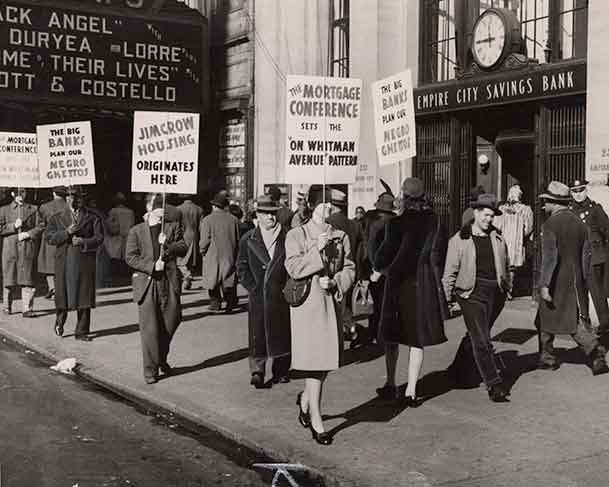
The fight for civil rights in America wasn't a sudden explosion, but a slow, burning fuse, meticulously laid over nearly a century before it erupted into the transformative era we commonly associate with the 1950s and 1960s. To truly grasp the profound shifts of the Civil Rights Era, you need to understand the deep roots of injustice and the persistent, often unseen, struggles that predated the iconic marches and speeches. This isn't just history; it's the foundational story of America's ongoing quest for its ideals.
At a Glance: Key Takeaways
- The Civil Rights Era (1950s-1970s) was the culmination of efforts dating back to post-Civil War Reconstruction.
- Early promises of equality after emancipation were systematically undermined by "Black Codes" and economic exploitation.
- Factors like the Great Migration, World War II's hypocrisy, and Cold War pressures created fertile ground for renewed activism in the mid-20th century.
- Organizations like the NAACP led early legal challenges, setting the stage for major victories like Brown v. Board of Education.
- Nonviolent resistance, championed by figures like Martin Luther King Jr., brought national and international attention to the movement.
- The mid-1960s saw the rise of more assertive approaches, exemplified by the Black Power movement, reflecting diverse strategies within the struggle.
- Landmark legislation, including the Civil Rights Act of 1964 and the Voting Rights Act of 1965, dramatically reshaped American society.
- The movement's legacy continues to influence contemporary discussions on racial justice, systemic inequality, and the pursuit of true equality.
The Long Shadow: From Reconstruction's Promise to Jim Crow's Reality
After the dust settled from the Civil War and slavery was abolished, the Reconstruction era (late 1860s-1870s) offered a fleeting glimpse of hope. New civil rights laws and three pivotal Constitutional amendments – the 13th (abolishing slavery), 14th (granting citizenship and equal protection), and 15th (securing voting rights for Black men) – aimed to integrate former slaves into American society as full citizens. However, this promising dawn quickly faded.
Economic depression, coupled with a fierce backlash from white Southerners, systematically dismantled these gains. "Black Codes" and later, the insidious system of Jim Crow laws, emerged to control and oppress Black Americans, particularly in the South. These laws codified racial segregation in virtually every aspect of life: schools, hospitals, transportation, restaurants, and even cemeteries. They were designed not just to separate, but to subordinate.
This legal framework of segregation was buttressed by widespread economic exploitation. Sharecropping, a system where Black farmers worked land owned by whites, often trapped them in perpetual debt, effectively a new form of economic bondage. Black southerners faced drastically lower wages, limited opportunities for advancement, and a pervasive social inferiority that stifled progress for nearly a century after emancipation. The promise of freedom was starkly contrasted with the reality of second-class citizenship, systemic injustice, and often, brutal violence.
Seeds of Change: Why the Mid-20th Century Sparked a Revolution
By the 1940s and 1950s, a confluence of factors began to churn the waters of complacency, laying the groundwork for a renewed and intensified fight for equality.
One major catalyst was the Great Migration. Between World War I and World War II, millions of Black southerners, fleeing the terror of Jim Crow and seeking economic opportunity, moved to Northern and Midwestern cities. This massive demographic shift, driven by Southern segregation and Northern labor needs, transformed urban landscapes. In these new environments, urbanized Black communities began to gain political and economic leverage they couldn't achieve in the rural South.
The postwar economic boom of the 1950s further empowered these communities. With greater resources, they built stronger institutions and found allies. Labor unions, recognizing the growing Black workforce, and the Democratic Party, shifting its political alignment, increasingly lent their support. This burgeoning influence heightened national awareness of the inherent injustice and hypocrisy of segregation.
Perhaps nothing highlighted this hypocrisy more sharply than World War II. Over a million Black soldiers fought bravely for freedom and democracy abroad, often in segregated units, only to return home to a nation that denied them those very freedoms. The stark contrast between America's wartime rhetoric and its domestic reality was a moral stain that fueled widespread activism. Adding another layer of pressure, the Cold War ideology magnified this contradiction on the global stage, as the U.S. championed democracy against communism while simultaneously upholding racial apartheid at home. This made America's internal race problems an international embarrassment, creating diplomatic pressure for change.
Early Victories & Laying the Groundwork
While the 1950s often steal the spotlight, the groundwork for the Civil Rights Era was meticulously laid by dedicated activists and organizations decades earlier. The National Association for the Advancement of Colored People (NAACP), founded in 1909, stands as a testament to this long-term commitment. For decades, the NAACP tirelessly championed civil rights through a multi-pronged strategy:
- Litigation: Challenging discriminatory laws in court.
- Lobbying: Advocating for legislative change.
- Education: Raising public awareness about racial injustice.
Their persistent legal battles yielded significant successes, most notably the defense of the Scottsboro Boys (1931-1937), a landmark case that highlighted racial injustice in the legal system and affirmed the right to adequate legal representation.
Another pivotal, though often less celebrated, early effort was the March on Washington Movement in 1941. Led by labor leader A. Philip Randolph and strategist Bayard Rustin, this planned demonstration successfully pressured President Franklin D. Roosevelt to issue Executive Order 8802, which banned racial discrimination in the defense industry and federal government. It was a clear demonstration of the power of organized protest, even before the mainstream Civil Rights Era truly took shape.
These early efforts culminated in a monumental victory in 1954: the Supreme Court's unanimous decision in Brown v. Board of Education. This landmark ruling declared segregation in public schools unconstitutional, directly challenging the "separate but equal" doctrine established by Plessy v. Ferguson (1896). While implementation was slow and met with fierce resistance, Brown provided a critical legal precedent and galvanized the movement, signaling that the era of state-sanctioned segregation was, legally at least, on borrowed time.
The Power of Nonviolent Resistance: A Movement Ignites
With the legal precedent of Brown v. Board of Education in place, the mid-1950s marked a dramatic shift. Inspired by Mahatma Gandhi's philosophy of satyagraha (truth-force), nonviolent resistance became the core tactic for challenging segregation and racial injustice. This approach relied on peaceful protests, boycotts, and civil disobedience to expose the brutality of segregation and appeal to the nation's moral conscience.
Central to this phase was the charismatic leadership of Martin Luther King Jr. and the organization he co-founded, the Southern Christian Leadership Conference (SCLC). Dr. King’s powerful oratory and unwavering commitment to nonviolence provided both moral guidance and strategic direction. To understand the depth of his influence, it’s worth exploring Dr. King’s philosophy of nonviolent resistance and how it shaped the movement’s most impactful campaigns.
One of the movement's earliest and most successful mass actions was the Montgomery Bus Boycott (1955-1956). Sparked by Rosa Parks' courageous refusal to give up her seat, this year-long boycott, organized by King and other local leaders, crippled the city's public transportation system. It ultimately led to a Supreme Court ruling that declared bus segregation unconstitutional, demonstrating the economic and moral power of collective nonviolent action.
The momentum continued to build through sit-ins, Freedom Rides, and other direct actions. These efforts gained widespread domestic and international sympathy as media coverage exposed the violent responses of segregationists to peaceful protestors. The pinnacle of this period of nonviolent direct action was the March on Washington for Jobs and Freedom in 1963. Attracting over 250,000 people, this historic demonstration culminated in Dr. King's iconic "I Have a Dream" speech, a powerful articulation of the movement's aspirations for racial harmony and equality that echoed globally.
Challenges and Shifting Tides: The Rise of Black Power
As the Civil Rights Movement achieved legislative victories and gained national attention, it also faced growing complexities and internal debates. The slow pace of change, continued systemic racism, and the persistent threat of violence led some within the movement to question the effectiveness and limitations of nonviolent resistance alone.
By the mid-1960s, a new, more assertive philosophy began to emerge: the Black Power movement. This shift emphasized African American empowerment, self-defense, and cultural pride, advocating for self-determination and the development of Black institutions. Leaders like Stokely Carmichael (later Kwame Ture) and Malcolm X became prominent voices, challenging the integrationist goals of earlier civil rights leaders and advocating for Black people to define their own path to liberation. Malcolm X, particularly, championed Black self-sufficiency and, initially, a more separatist stance, before his views evolved closer to a universal human rights perspective.
While sometimes viewed in contrast to the nonviolent movement, the Black Power movement served as a vital response to the deep-seated frustrations of many Black Americans. It reclaimed Black identity, instilled a sense of pride, and pushed for structural changes beyond mere desegregation. For a deeper dive into this pivotal shift, exploring the profound impact of the Black Power movement offers valuable insights into its varied expressions and lasting contributions. However, the movement's association with self-defense and its perceived militancy sometimes alienated white allies and mainstream supporters, leading to internal divisions within the broader struggle for civil rights.
Adding another layer of challenge was significant government opposition. The FBI's COINTELPRO program, launched in 1956, engaged in widespread surveillance, infiltration, sabotage, and even violence to disrupt civil rights organizations, particularly those perceived as radical or threatening, including the Black Power movement and even elements of the SCLC. This clandestine government action created an atmosphere of paranoia and actively hindered the progress of various groups striving for justice.
Legislative Milestones: Crafting a More Just Nation
Despite internal divisions and external opposition, the pressure exerted by the Civil Rights Movement had a profound and undeniable impact on domestic legislation, particularly during Lyndon B. Johnson's presidency in the 1960s. Johnson, a master legislator, recognized the moral imperative and political opportunity to push through sweeping reforms.
The crowning achievement was the Civil Rights Act of 1964. After fierce congressional debate and overcome by Johnson's political will, this landmark law outlawed discrimination based on race, color, religion, sex, or national origin. It prohibited discrimination in public accommodations, employment, and federally funded programs. This act was not just a victory for racial equality; by including "sex" as a protected category, it also provided crucial momentum for the burgeoning feminist movement.
Building on this foundation, Johnson signed the Voting Rights Act of 1965. This monumental piece of legislation dismantled the discriminatory voting practices, such as literacy tests and poll taxes, that had disenfranchised Black Americans for decades. It authorized federal oversight of voter registration and elections in areas with a history of discrimination. The impact was immediate and dramatic, leading to a massive increase in Black voter registration and political participation across the South. To understand its profound and lasting effects, it's essential to grasp the enduring legacy of the Voting Rights Act of 1965.
These legislative triumphs were part of Johnson's broader vision for a "Great Society," a series of ambitious social programs aimed at eradicating poverty and racial injustice. Policies like the War on Poverty were direct outgrowths of the movement for racial equality, acknowledging that legal rights alone were insufficient without economic opportunity. While the Great Society programs faced their own challenges and criticisms, they represented a significant governmental commitment to addressing systemic inequalities fueled by the civil rights struggle.
The Enduring Legacy and Unfinished Work
While the organized Civil Rights Movement, in its traditional form, began to lose some of its focused momentum and dissipate by the 1970s, its achievements for Black Americans and other marginalized groups have proved remarkably resilient and enduring. The legislative victories of the 1960s fundamentally reshaped the legal landscape of the United States, dismantling overt segregation and opening doors that had been closed for centuries.
However, the legacy of the Civil Rights Movement remains a subject of ongoing debate today. To what extent were its goals truly achieved? Many argue that while legal discrimination was outlawed, systemic racism and de facto segregation persist in areas like housing, education, and the justice system. The effectiveness of its various tactics—nonviolent direct action versus more assertive approaches—is also continuously scrutinized by historians and activists alike.
Perhaps most critically, the relevance of the Civil Rights Era to contemporary social justice issues is undeniable. The struggle against police brutality, mass incarceration, and other forms of systemic racism are direct continuations of the fight for equality. Understanding contemporary struggles for civil rights often requires looking back at the historical blueprints laid by the earlier movement.
The role of white allies, too, is a critical part of the conversation. While the movement was Black-led, white Americans who joined the struggle, sometimes at great personal risk, played a part in shifting public opinion and securing legislative victories. Their involvement highlights the complexity of social change and the importance of cross-racial solidarity.
Moving Forward: Lessons from a Century of Struggle
The century-long journey from Reconstruction's broken promises to the legislative triumphs of the Civil Rights Era offers invaluable lessons for anyone seeking to understand American society or to advocate for justice today. It teaches us that change is rarely swift or easy, that progress often involves setbacks, and that a multitude of strategies—from legal challenges to mass protest to cultural awakening—are necessary for profound societal transformation.
The persistent struggle also reminds us that while laws can change quickly, deeply embedded prejudices and systemic inequalities take generations to dismantle. The work begun by countless courageous individuals in the Civil Rights Era continues today, adapting to new challenges but rooted in the same fundamental pursuit of human dignity and equality.
To truly engage with this history, to appreciate its complexities and its ongoing relevance, requires a willingness to look beyond simple narratives and engage with the lived experiences that shaped this pivotal period. Exploring diverse historical accounts and narratives can provide a richer understanding of the people and events that defined this era. For instance, sometimes fictionalized accounts can help illuminate the human impact of historical realities; you can Learn more about The Help 2 as another avenue for exploring themes of racial injustice and the complexities of race relations during the Jim Crow era. The Civil Rights Era isn't just a chapter in a textbook; it’s a living testament to the power of collective action and a perpetual call to vigilance in the pursuit of justice.